
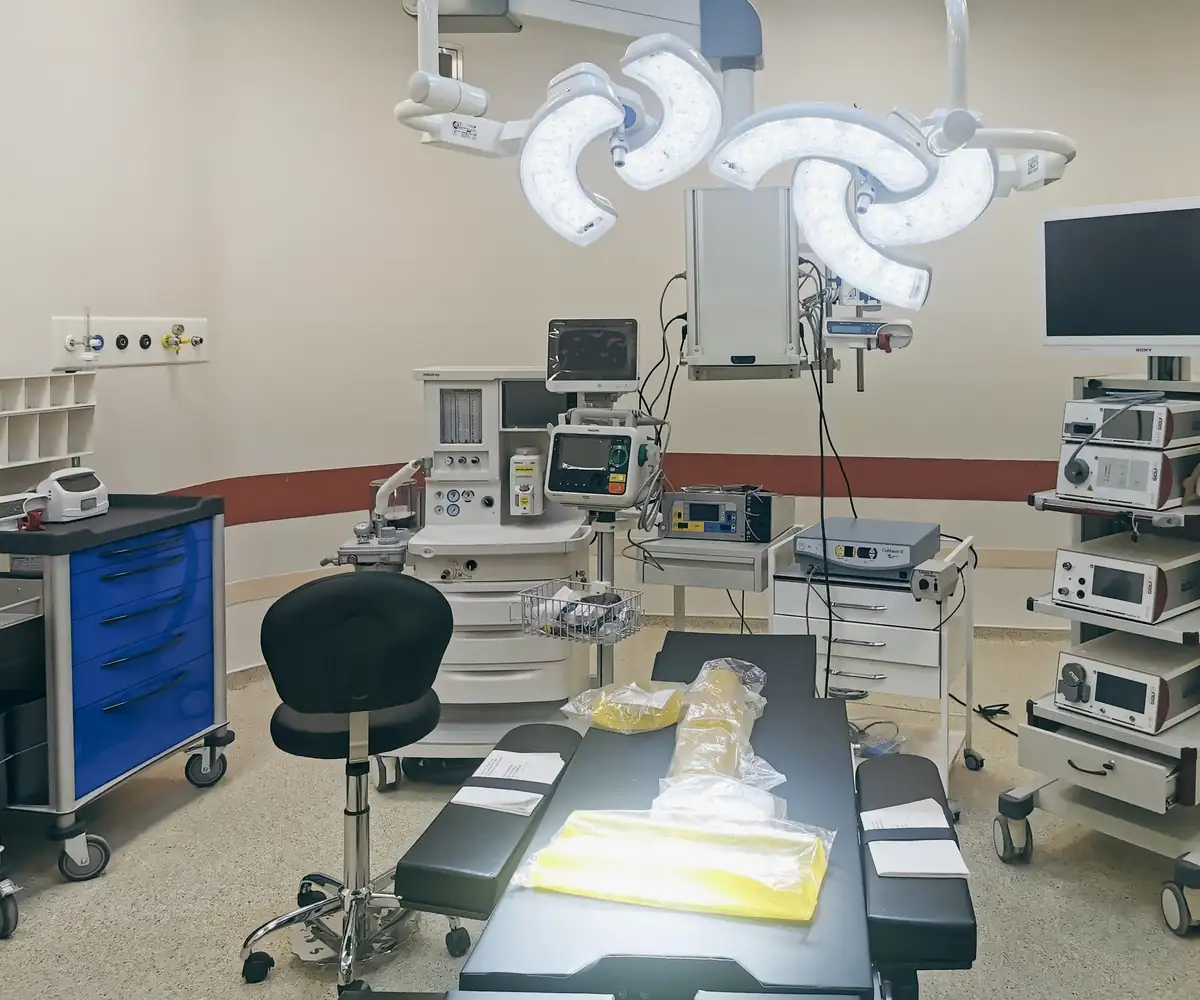
Surgery center (ASC) billing
Facility claims priced to Addendum AA, with discounts, devices and drugs checked first.
We bill surgery centers the way Medicare’s ASC payment system pays them: each case checked against the 2026 covered procedures list and its payment indicator, discounts and device credits applied correctly, and each payer’s modifier rules followed.
- Full-service rate
- 3% to 6% of collections
- 2026 Medicare ASC update
- 2.6% for quality reporters
- Multiple procedures
- 100% first, 50% the rest
- New & smaller practices
- Flexible monthly minimum
What makes ASC billing different
A surgery center bills the facility side of each case: room, nursing, supplies, most drugs and most implants, in one payment per procedure. Surgeons and anesthesia bill their own claims, and 42 CFR part 416 lists what is packaged into the facility rate and what is paid on top of it.
For 2026, the OPPS/ASC final rule raised ASC rates 2.6 percent (a 3.3 percent market basket less a 0.7 point productivity cut) for centers meeting quality reporting; centers that miss it lose 2 points. We bill the facility claim inside our full revenue cycle service at 3% to 6% of collections.

Getting a surgery center into Medicare
Meet state licensure
Medicare’s conditions for coverage start with your state’s licensure law.
Pass a survey or accreditation
A state survey agency inspects the center, or CMS deems it compliant through a national accrediting body.
Enroll on the CMS-855B
The center enrolls as an ASC supplier with a type 2 NPI and sends the CMS-370 supplier agreement.
Sign the agreement
The center signs and files the ASC agreement, and CMS returns a copy with the effective date.
Contract other payers
We then credential the center with each plan you choose.
The 2026 covered procedures list
Medicare pays an ASC only for procedures on its covered list. From January 1, 2026, a surgical procedure qualifies under 42 CFR 416.166 if it is separately paid under the hospital outpatient system, is not on the inpatient-only list, is not reported with an unlisted code and is not otherwise excluded. Five old exclusions, such as extensive blood loss, became safety factors the physician weighs.
A procedure that is not on the ASC payment files is denied with reason code 8 and remark N95, under chapter 14 of the Medicare Claims Processing Manual, so we check every scheduled case.
Payment indicators in CMS’s ASC addenda
Every code in Addendum AA (procedures) and BB (ancillary services) carries one. Common ones, October 2026:
- A2 and G2Procedures paid from the OPPS relative weight: A2 if on the 2007 list, G2 if added later and not office-based.
- P2, P3 and R2Office-based procedures. P3 is paid at the physician fee schedule’s non-facility practice expense amount, P2 and R2 from the OPPS weight.
- J8Device-intensive procedure, paid at an adjusted rate.
- N1Packaged: no separate payment, the cost sits in the procedure’s rate.
- K2Drugs, biologicals and radiopharmaceuticals paid separately at the OPPS rate.
- J7 and H2Pass-through devices (contractor-priced) and brachytherapy sources, paid separately with a covered procedure.
How the rate is paid, discounted and cut
Medicare pays 80 percent of the lower of your charge or the wage-adjusted ASC rate (42 CFR 416.172). When two or more procedures flagged for discounting in Addendum AA are done in one session, the highest-paying one is paid in full and the rest at 50 percent. A bilateral procedure goes on two lines or one line with 2 units, and the discount applies to it too.
A case stopped after the patient reached the room but before anesthesia takes 73 and is paid at 50 percent; one stopped after induction or the first incision takes 74 and is paid in full. The operative report must say why it stopped.
Implants, devices and separately paid drugs
Most implants, intraocular lenses included, are packaged into the procedure, and implants billed on their own line are denied (reason 97, remark M97). In a device-intensive procedure (J8), where the device is more than 30 percent of the cost, the device portion is paid from the hospital outpatient rate. Total knee and hip replacements carry J8 in the October 2026 addenda.
When the manufacturer supplies a device free or gives full credit, the procedure takes FB; a partial credit of 50 percent or more takes FC, on the procedures CMS lists. Pass-through devices (J7) go on their own line, drugs with K2 are paid at the OPPS rate, and from 2025 through 2027 qualifying non-opioid pain drugs and devices are also paid separately.
The facility claim and the SG modifier
An ASC bills Medicare on the 837P, or rarely a paper CMS-1500, under its own NPI with place of service 24. Medicare stopped requiring the SG modifier on ASC facility claims for dates of service from January 1, 2008, per chapter 14.
Some payers still want it. Premera Blue Cross’s policy, last approved in June 2026, recognizes ASC facility services billed with SG and place of service 24, while Washington Apple Health took SG out of its ASC billing table in May 2025. We set SG payer by payer.
Prior authorization for ASC cases
Medicare’s ASC prior authorization demonstration covers blepharoplasty, botulinum toxin injections, panniculectomy, rhinoplasty and vein ablation in California, Florida, Tennessee, Pennsylvania, Maryland, Georgia and New York (dates of service from January 19, 2026) and Texas, Arizona and Ohio (from February 16, 2026). Requesting is voluntary, but claims sent without it go to prepayment review.
Other plans keep their own lists. Our prior authorization team checks each scheduled case against the patient’s plan.
Why ASC claims deny
Common denials, with the reason codes that often carry them (codes vary by payer):
- A procedure not on the ASC payment files (CO-8 with N95)
- An implant or packaged item billed on its own line (CO-97 with M97)
- A drug, device or ancillary line with no covered procedure that day (CO-16 with M51)
- 73, 74, FB or FC missing or misused (CO-4, or a short payment)
- No authorization where the plan or the Medicare demonstration requires one (CO-197)
- A surgeon or anesthesia provider not enrolled on the date of service (CO-B7)
Each goes through our denial management process, corrected and resubmitted or appealed with the operative note.
How we run ASC billing
Load the payment files
Addendum AA indicators, discount flags and device offsets each quarter, plus each contract.
Clear each case before surgery
Eligibility, the covered list, prior authorization and implant pricing, at scheduling.
Code from the op note
Procedures, laterality, discount order, 73 or 74, FB or FC and drug units, before the claim goes out.
Work what comes back
Denials and short payments are worked by payer and reason code.
Report monthly
Collections, days in A/R and denials by reason, by surgeon and payer.
Credentialing the center, its surgeons and anesthesia
Medicare screens ASCs at its limited risk level, so enrollment turns on the survey or accreditation and a complete CMS-855B. Inside the center, surgeons operate only with privileges granted by the governing body and reappraised periodically (42 CFR 416.42 and 416.45). A CRNA giving anesthesia is supervised by the operating physician unless the state has opted out.
Each surgeon and anesthesia provider is also enrolled with every payer for their own claims. Our provider credentialing service tracks the center and every provider at $189 per payer application, less in bulk; our anesthesia billing page covers the anesthesia claims.
Not sure your facility claims are priced right? Send us a month of ASC claims with the op notes and we’ll check them, free.
No. Medicare stopped requiring SG on ASC facility claims for dates of service from January 1, 2008, and the ASC bills on the 837P with place of service 24 under its own NPI. Some commercial payers, Premera Blue Cross among them, still recognize ASC facility lines by SG, so we follow each payer’s policy.
When two or more procedures flagged for discounting in CMS’s Addendum AA are done in one session, Medicare pays the highest-paying one in full and the others at 50 percent. A bilateral procedure counts as two. Lines with modifier 73 or 52 are not discounted again.
One where the implanted device is more than 30 percent of the procedure’s cost under CMS’s rate-setting method. It carries payment indicator J8; the device portion is paid from the hospital outpatient rate and the rest at the ASC rate. If the device was free or credited, FB or FC lowers the payment.
2.6 percent for centers meeting ASC quality reporting: a 3.3 percent hospital market basket less 0.7 points for productivity. Centers that miss reporting lose 2 points. CMS also added 289 procedures to the covered list, plus 271 codes taken off the inpatient-only list.
Our full-service rate is 3% to 6% of monthly collections, set by your volume, with no setup or onboarding fees and flexible monthly-minimum plans for new and smaller practices. It covers eligibility checks, prior authorizations, coding, claims, payment posting, denials and A/R follow-up. Your exact rate comes after a free A/R review. Our guide to medical billing costs shows how to compare quotes.
Yes. We don’t list our clients on this site, but ask us and we’ll arrange it: with a current client’s permission, we share their contact details so you can hear how we work from them directly.
From our guides

How to calculate days in A/R
The formula with a worked example and a calculator, the benchmarks, why a good average can hide old claims, and the fixes that bring days in A/R down.
How much do medical billing services cost?
The four ways billing companies price their work, the fees that sit outside the rate, and in-house arithmetic built from BLS data, so you can compare quotes on your own numbers.

Send us your last 90 days of ASC claims.
We’ll review them free and show you where discounts, device credits or packaged lines are costing you money.