
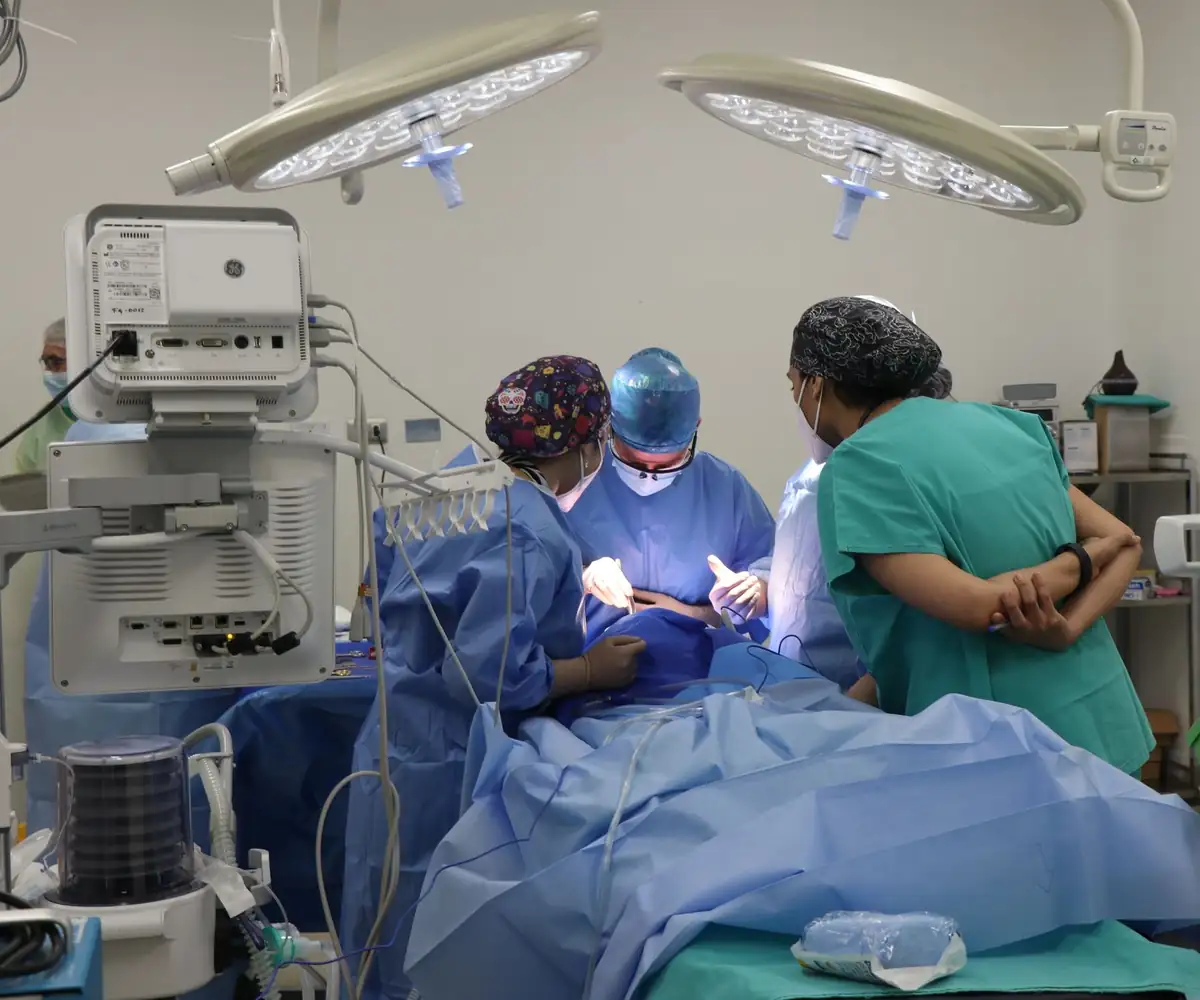
Anesthesia billing
Minutes, units and payment modifiers checked against the record on every case.
We bill anesthesia the way Medicare prices it: base units plus time units in tenths, times the 2026 conversion factor, with the payment modifier that matches who gave the care and how many rooms the anesthesiologist was covering.
- Full-service rate
- 3% to 6% of collections
- 2026 anesthesia CF
- $20.4976 national
- Medically directed cases
- 50% to each provider
- New & smaller practices
- Flexible monthly minimum
What makes anesthesia billing different
Medicare prices anesthesia its own way. It adds the code’s base units to the time units, multiplies by an anesthesia conversion factor, then pays according to who gave the care: an anesthesiologist alone, a CRNA alone, or an anesthesiologist directing CRNAs or residents in several rooms.
For 2026, the physician fee schedule final rule set the national anesthesia conversion factor at $20.4976 ($20.5998 for qualifying APM participants), with a one-year 2.5 percent statutory increase. We bill all of it inside our full revenue cycle service at 3% to 6% of collections.

How Medicare prices an anesthesia claim
Medicare’s 2026 rules. Medicaid and commercial plans set their own.
- Base unitsFixed per anesthesia code by CMS. The pre-anesthesia evaluation and routine post-op check are paid in them, not in the time.
- Time unitsActual minutes divided by 15, rounded to one decimal place: 47 minutes is 3.1 units.
- Conversion factor$20.4976 national, adjusted by locality: $19.53 in Alabama and $21.26 in Los Angeles, for example.
- Personally performedAA for the anesthesiologist, QZ for a CRNA without medical direction. Paid the full fee.
- Medically directedQK (two to four concurrent cases) or QY (one CRNA) for the anesthesiologist, QX for the CRNA. Each paid 50 percent.
- Medically supervisedAD, more than four concurrent cases: three base units, plus one time unit if present at induction.
- Physical statusP1 to P6 describe the patient’s ASA class. Medicare pays nothing extra for them.
- Qualifying circumstances99100, 99116, 99135 and 99140 are bundled in Medicare’s 2026 fee schedule file.
Counting anesthesia time, with a worked example
Under chapter 12 of the Medicare Claims Processing Manual, anesthesia time starts when the practitioner begins preparing the patient in the operating room or an equivalent area, and ends when the patient can be placed safely under postoperative care. You may add blocks of time around an interruption if care was continuous within each block.
In the 2026 NCCI policy manual’s cataract example, time monitoring the block and the surgery counts, but the gap between them does not unless the patient needed continuous monitoring.
At the national rate, 7 base units and 90 minutes (6.0 time units) make 13 units, or $266.47. If an anesthesiologist directed a CRNA on that case, both report the same time and each is allowed half, $133.23, before locality adjustment and coinsurance.
Medical direction or medical supervision
QK or QY needs all seven medical direction steps on each case: the pre-anesthetic exam, the plan, taking part in the most demanding parts (induction and emergence where they apply), making sure a qualified person does the rest, monitoring at frequent intervals, staying present and available for emergencies, and post-anesthesia care. The record has to show them.
Concurrency counts every patient, Medicare or not. A short nearby emergency or a labor epidural does not break medical direction, but leaving the area for long does. A fifth room, or other services while directing, makes the case AD. When a case truly needed both an anesthesiologist and a CRNA fully involved, both are paid in full with AA and QZ, with documentation from each.
MAC, physical status and qualifying circumstances
Medicare pays monitored anesthesia care like other anesthesia. QS marks a MAC case for information only, so it always goes with a payment modifier. G8 shows a deep, complex or markedly invasive procedure, and G9 a patient with a history of a severe cardiopulmonary condition.
The American Society of Anesthesiologists notes that Medicare pays no added units for P modifiers, though many private payers do. Indiana Medicaid, for example, adds 1 unit for P3, 2 for P4 and 3 for P5, adds units for patients under 1 or over 70, pays 99140 at up to two units, and rounds each part of 15 minutes up to a full time unit.
CRNA billing and opt-out states
A CRNA can bill Medicare under their own NPI or have payment made to the group, hospital or surgery center they work for. Without medical direction the line carries QZ and is priced with the same formula, capped at the anesthesiologist’s personally performed amount.
Supervision is a separate rule. Under Medicare’s conditions for hospitals (42 CFR 482.52) and surgery centers (42 CFR 416.42), a CRNA is supervised by the operating practitioner, or in a hospital an anesthesiologist, unless the governor has opted the state out. Ohio became the 27th opt-out state in July 2026, according to the AANA. Opting out changes supervision, not billing: QZ still means no medical direction.
Teaching anesthesiologists and multiple procedures
A teaching anesthesiologist is paid the full fee, with AA and GC, for one resident case, two concurrent resident cases, or one resident case alongside a medically directed case. They, or another anesthesiologist in the group, must be present for all critical or key portions and immediately available throughout, and the claim carries the NPI of whoever started the case.
For several procedures under one anesthetic, report the code with the highest base units and the total time on that line. NCCI allows a separate block for post-op pain only when the surgery did not depend on it and the case was under general anesthesia (or spinal or epidural, for a peripheral nerve block), with 59 or XU on the block.
Why anesthesia claims deny
Common denials, with the reason codes that often carry them (codes vary by payer):
- No payment modifier, or one that conflicts with the CRNA’s line, such as QK against QZ (CO-4)
- Two anesthesia codes for one session (CO-97 or CO-236)
- A post-op pain block billed when it was the main anesthetic (CO-97 or CO-236)
- 99100 to 99140 sent to Medicare, which bundles them (CO-234)
- Missing time, or times overlapping another case by the same CRNA (CO-16)
- A provider not yet enrolled on the date of service (CO-B7)
Each goes through our denial management process, and our CO-97 guide explains bundling denials and when a corrected claim fixes them.
How we run anesthesia billing
Map payers and facilities
Each payer’s conversion factor, time rounding and P modifier rules, and every facility you cover.
Match the paired claims
Anesthesiologist and CRNA lines are checked against each other for modifier, time and concurrency.
Check against the record
Times, medical direction steps, MAC modifiers and block notes, before claims go out.
Work what comes back
Denials are worked by payer and reason code until paid or closed with a reason.
Report monthly
Collections, days in A/R and denials by reason, by facility and provider.
Credentialing anesthesiologists and CRNAs at each facility
Each hospital and surgery center grants its own clinical privileges, and each payer enrolls every anesthesiologist and CRNA under the group that bills for them; a case before the effective date comes back unpaid. Our provider credentialing service tracks privileges and payer effective dates at $189 per payer application, less in bulk, and our surgery center billing page covers the facility side of the same cases.
Not sure your units and modifiers are right? Send us a month of anesthesia claims with the records and we’ll check them, free.
Medicare adds the code’s base units to the time units (minutes divided by 15, to one decimal place) and multiplies by the anesthesia conversion factor for your locality; the 2026 national factor is $20.4976. The payment modifier sets the share: the full fee for AA or QZ, half each for a directing anesthesiologist and CRNA.
QY is medical direction of one CRNA, and QK of two, three or four concurrent cases. Both pay 50 percent, and the CRNA bills QX. AD is medical supervision of more than four concurrent cases, or directing while doing other work, and Medicare allows only three base units, plus one time unit if the anesthesiologist was present at induction.
No. Medicare pays no added units for P1 to P6 and bundles the qualifying circumstances codes 99100 to 99140. Many commercial plans and some Medicaid programs pay both; Indiana Medicaid adds 1 unit for P3, 2 for P4 and 3 for P5. We report them on every claim.
Yes. A CRNA can bill under their own NPI or reassign payment to the group, hospital or surgery center they work for. Without medical direction the claim carries QZ and is paid from the same base and time units, capped at the personally performed amount. With medical direction it carries QX and is paid 50 percent.
Our full-service rate is 3% to 6% of monthly collections, set by your volume, with no setup or onboarding fees and flexible monthly-minimum plans for new and smaller practices. It covers eligibility checks, prior authorizations, coding, claims, payment posting, denials and A/R follow-up. Your exact rate comes after a free A/R review. Our guide to medical billing costs shows how to compare quotes.
Yes. We don’t list our clients on this site, but ask us and we’ll arrange it: with a current client’s permission, we share their contact details so you can hear how we work from them directly.
From our guides

How to calculate days in A/R
The formula with a worked example and a calculator, the benchmarks, why a good average can hide old claims, and the fixes that bring days in A/R down.
How much do medical billing services cost?
The four ways billing companies price their work, the fees that sit outside the rate, and in-house arithmetic built from BLS data, so you can compare quotes on your own numbers.

Send us your last 90 days of anesthesia claims.
We’ll review them free and show you where time units, modifiers or medical direction are costing you money.