
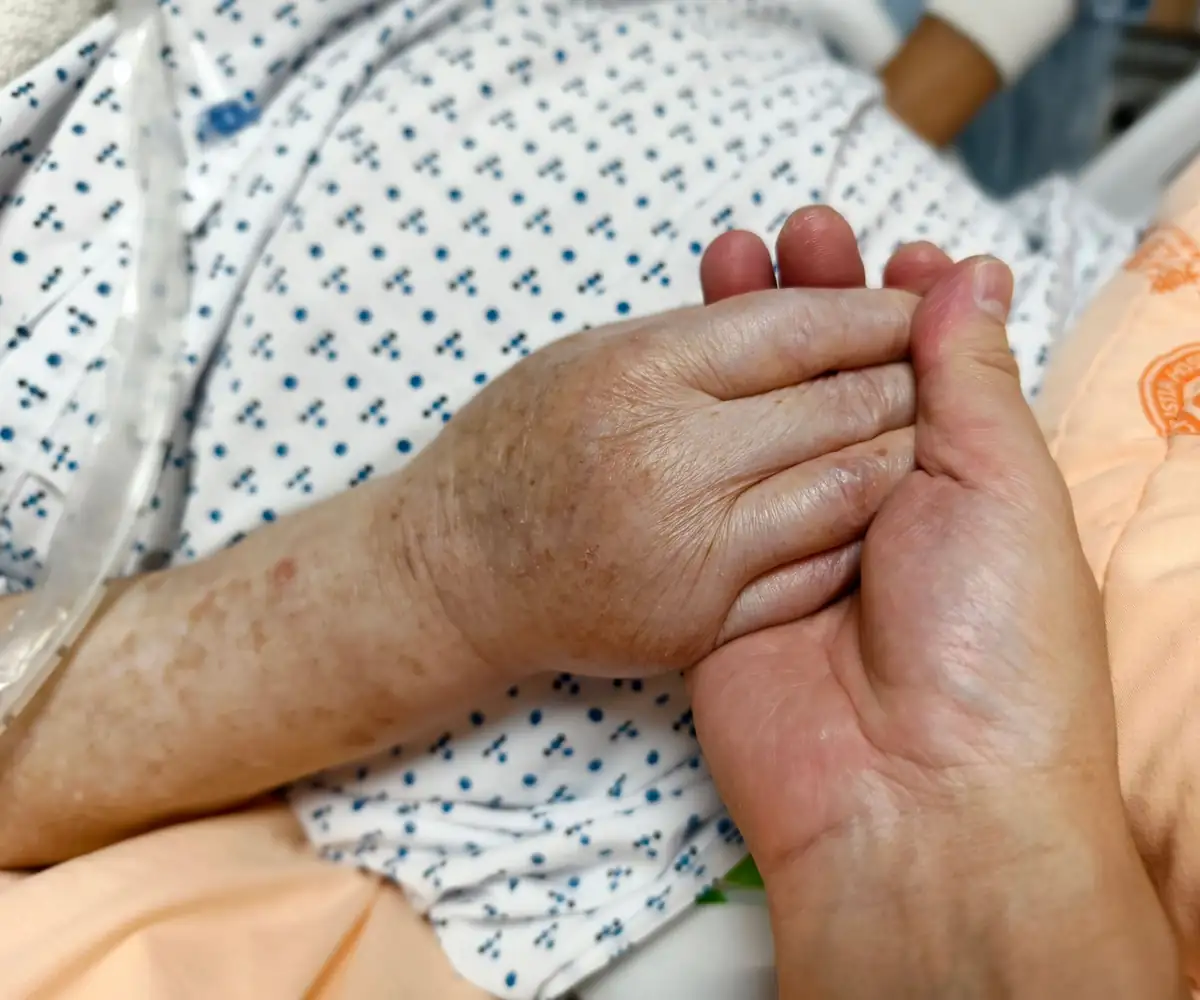
Hospice billing
Election, certification and notice dates tracked so every covered day gets paid.
We bill hospice the way Medicare pays it: a daily rate at one of four levels of care, Notices of Election accepted within 5 days, certifications and face-to-face encounters on time, and monthly claims kept inside the cap.
- Full-service rate
- 3% to 6% of collections
- FY 2027 hospice cap
- $36,174.75 per beneficiary
- NOE and NOTR
- Due within 5 calendar days
- New & smaller practices
- Flexible monthly minimum
What makes hospice billing different
Medicare pays a hospice a daily rate at one of four levels of care and caps its payments each year. Whether a day is paid depends on paperwork: a signed election, a Notice of Election accepted on time, and a certification for each benefit period.
For FY 2026, CMS raised hospice rates 2.6 percent and set the cap at $35,361.44. For FY 2027, from October 1, 2026, CMS Transmittal 13976 sets a 2.3 percent update and a $36,174.75 cap. Hospices that do not submit quality data get 4 percentage points less. We bill it inside our full revenue cycle service at 3% to 6% of collections.

The four levels of care, with FY 2027 rates
FY 2027 national rates for hospices reporting quality data, before wage index.
- Routine home care, 0651$236.33 a day for days 1 to 60, then $186.33, however many visits that day.
- Continuous home care, 0652$71.92 an hour in 15-minute units, in a crisis only: at least 8 hours in a day, more than half nursing.
- Inpatient respite care, 0655$545.93 a day for up to 5 days in a row, then paid as routine home care.
- General inpatient care, 0656$1,231.51 a day, for pain or symptoms that cannot be managed elsewhere.
- Service intensity add-onRN and social worker visits during routine home care in the last 7 days of life, at the hourly continuous care rate, up to 4 hours a day.
The election, the Notice of Election and the NOTR
Under 42 CFR 418.24, for elections from October 1, 2026, every patient gets an election statement addendum within 5 days, listing what the hospice will not cover as unrelated to the terminal illness. Until then, it was given only on request.
The Notice of Election must be submitted to and accepted by the Medicare contractor within 5 calendar days after admission. Under chapter 11 of the Claims Processing Manual, if it is late, Medicare does not pay the days until acceptance: they are billed as non-covered with occurrence span code 77, and the patient cannot be charged. Exceptions, requested with modifier KX, are narrow.
After a live discharge or revocation, the Notice of Termination/Revocation is due within 5 calendar days, unless the final claim is already in.
Benefit periods, certifications and face-to-face encounters
Hospice runs in two 90-day benefit periods, then unlimited 60-day periods. Under chapter 9 of the Benefit Policy Manual, each period needs an oral or written certification within 2 calendar days of its start, and the signed written certification, with the physician’s own narrative, on file before you bill.
Before the third period and each one after, a hospice physician or nurse practitioner sees the patient face to face within 30 calendar days before recertification, and signs and dates an attestation, which can be a clinical note. Under 42 CFR 418.22, two-way audio and video is allowed through December 31, 2027, except, since January 31, 2026, in moratorium areas, at hospices under enhanced oversight, or by practitioners neither enrolled in nor opted out of Medicare. From January 1, 2027, telehealth encounters are reported on the claim.
Staying inside the hospice cap
Your aggregate cap is the cap amount times your Medicare patients for the year, each counted by their share of hospice days spent with you. A separate inpatient cap holds general inpatient and respite days to 20 percent of your Medicare hospice days. Payment above either cap is an overpayment.
The cap year runs with the federal fiscal year. You file your self-determined cap within 5 months after it ends, by the end of February, and repay any overpayment, or payments are suspended. A new hospice’s first cap period runs at least 12 and under 24 months. Long stays push you toward the cap, so we report your position monthly.
Monthly claims on the 837I and UB-04
Hospices bill the institutional claim, type of bill 081x (not hospital-based) or 082x (hospital-based), once per calendar month. A claim spanning two months is returned. Each level-of-care line carries a site code, such as Q5001 for home, and each visit is its own line in 15-minute units: G0299 for an RN, G0300 for an LPN, G0155 for a social worker, G0156 for an aide.
The claim for a certification month carries occurrence code 27, and Medicare checks the certifying physician’s enrollment on it. An attending physician not employed by the hospice bills Part B with modifier GV, unrelated care takes GW, and Part B claims for hospice patients without either are denied.
Quality data now comes from HOPE, which replaced the Hospice Item Set on October 1, 2025.
Why hospice claims deny
Common hospice denials:
- A late NOE: days before acceptance are the hospice’s loss
- A missing, unsigned or late certification, or a template narrative
- No face-to-face encounter before the third period, or an unsigned or undated attestation
- No addendum for an election from October 1, 2026
- A claim spanning two months, or two claims in one month
- General inpatient days found not necessary, which may be paid at the routine home care rate
- Part B physician claims without GV or GW
Each goes through our denial management process, corrected and resubmitted or appealed with the election, certification and visit notes.
Medicaid hospice and nursing facility room and board
Medicaid pays hospice at rates based on Medicare’s, and states may pay more. Medicaid.gov sets out the room-and-board rule: for a Medicaid resident of a nursing facility, the state pays the hospice 95 percent of the facility rate, less the resident’s own share of cost, and the hospice passes that payment to the facility. Medicare does not pay room and board.
Dual-eligible patients elect hospice under both programs at once. Medicaid also limits inpatient days to 20 percent of hospice days, and states may apply the cap. We bill the pass-through and reconcile it with each facility monthly.
How we run hospice billing
Check before admission
Eligibility, any open hospice election and the Medicare number, before the NOE.
File notices on time
NOEs and NOTRs within 5 calendar days, with acceptance confirmed.
Track every period
Benefit periods, certifications, face-to-face windows and addendum dates, per patient.
Bill monthly
Levels of care, site codes, visit lines and occurrence codes checked before each claim.
Watch the cap
Cap position, inpatient share and room-and-board pass-throughs, reported monthly.
Credentialing and Medicare certification for hospices
Get the state license first where your state requires one. A hospice enrolls in Medicare on the CMS-855A, with the application fee. The Medicare contractor recommends approval, the state or an approved accrediting organization surveys you, and CMS decides. New hospices are screened at Medicare’s high risk level, with fingerprint checks on every owner of 5 percent or more.
Original Medicare pays the hospice for Medicare Advantage members who elect hospice, so next come state Medicaid, any Medicaid plans and your commercial plans. Our provider credentialing service handles them at $189 per payer application, less in bulk.
Not sure your NOEs and certifications are on time? Send us a month of hospice claims with the election and certification dates and we’ll check them, free.
For FY 2026 (October 2025 to September 2026), the cap was $35,361.44 per beneficiary. For FY 2027, which began October 1, 2026, it is $36,174.75. Your cap is that amount times your Medicare patients for the year, each counted by their share of days with you.
Routine home care is 0651, continuous home care 0652, inpatient respite care 0655 and general inpatient care 0656. Each line also carries a site code, such as Q5001 for the patient’s home, and visits go on their own lines, such as 055x with G0299 for an RN.
Before the third benefit period and every period after it, within 30 calendar days before recertification. A hospice physician or nurse practitioner does it and signs and dates an attestation, which can be a clinical note. Two-way audio and video is allowed through December 31, 2027, with limits since January 31, 2026.
Not Medicare. For a Medicaid resident, the state pays the hospice 95 percent of the facility’s rate, less the resident’s share of cost, and the hospice passes it to the facility under their written agreement. A resident who pays privately keeps paying the facility.
Our full-service rate is 3% to 6% of monthly collections, set by your volume, with no setup or onboarding fees and flexible monthly-minimum plans for new and smaller practices. It covers eligibility checks, prior authorizations, coding, claims, payment posting, denials and A/R follow-up, plus NOE, certification and cap tracking. Your exact rate comes after a free A/R review. Our guide to medical billing costs shows how to compare quotes.
Yes. We don’t list our clients on this site, but ask us and we’ll arrange it: with a current client’s permission, we share their contact details so you can hear how we work from them directly.
From our guides

How to enroll in Medicare through PECOS
The access setup, the forms, the order to file in and the rules that decide your first billable day, for a new provider or a new group practice.
How much do medical billing services cost?
The four ways billing companies price their work, the fees that sit outside the rate, and in-house arithmetic built from BLS data, so you can compare quotes on your own numbers.

Send us your last 90 days of hospice claims.
We’ll review them free and show you where late notices, certifications or cap exposure are costing you money.